Children's books • learning worlds • SEND resources • school programmes
Hewston Higgins Books & Learning
Written by Jonathan Hewston • Sources reviewed October 2026 • Educational information, not clinical advice.
SEND topic resources

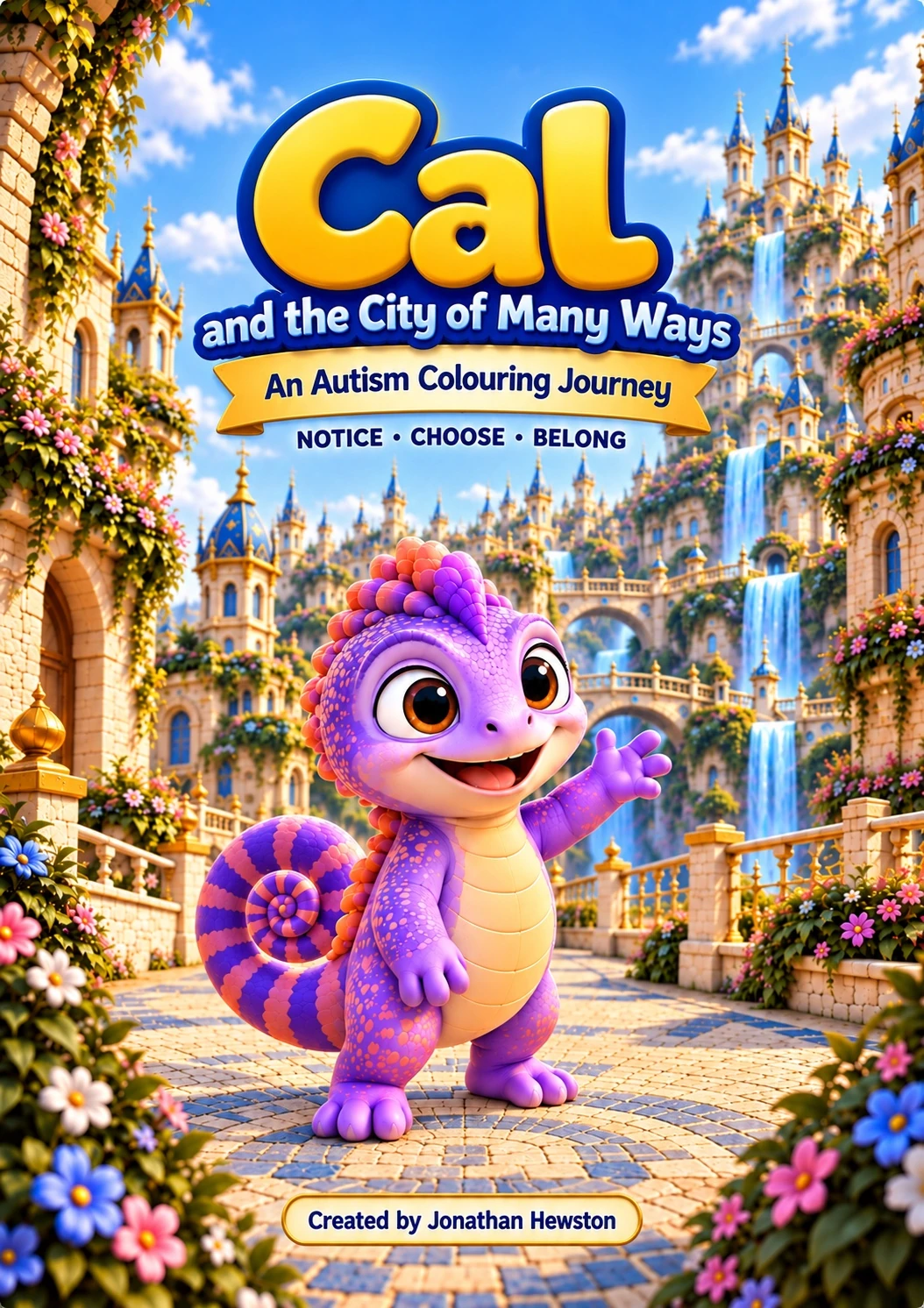
Autism books & City of Many Ways resources

A visual journey about difference, sensory experiences, communication, routes, processing and belonging.

What the resource is designed to do

Make the topic easier to approach and talk about.

Rather than presenting autism as a list of deficits, the Cal format uses story, characters and practical prompts to explore different experiences, strengths, challenges and possible supports.

  • Explore different ways of noticing and processing the world
  • Make space for sensory preferences and different communication styles
  • Use concrete worlds and recurring characters to provide context
  • Reinforce that belonging does not require everyone to behave the same way

These are educational resources, not diagnostic or therapeutic materials.

Autism books & City of Many Ways resources
Detailed guide

Autism: practical context for families and schools

Different children, different experiences

Autistic children are not a single learning type. Communication, sensory needs, routines, interests and preferred ways of processing information vary widely, so resources should offer flexibility rather than a one-size-fits-all method.

Visual supports and predictability

NICE guidance recommends considering visual supports that are meaningful for the child and recognises the importance of sensory sensitivities and predictability. That supports the case for clear visual information, structured sequences and environments that do not rely only on verbal explanation.

Sensory differences

Lighting, noise, colour and personal space can affect some autistic children. A website or book cannot know an individual child’s sensory profile, so the correct approach is to provide options and encourage adults to adapt the environment rather than present one sensory solution as universal.

Communication and belonging

Story can provide a shared, lower-pressure object to talk around. City of Many Ways uses a fictional world to explore different ways of communicating and experiencing a place, while avoiding the message that difference needs to be fixed.

Use alongside individual support

Educational books can support discussion and understanding, but they are not autism interventions. Where a child needs individual clinical, therapeutic or educational support, families and schools should use appropriate professional guidance.

How we use evidence

Hewston Higgins separates educational design choices from clinical claims. Government, NHS, NICE and EEF sources are used to explain the context; the books themselves are presented as educational resources, not proven treatments.

Written by Jonathan Hewston • Reviewed October 2026
Practical use

Using autism resources respectfully

Autistic children have varied strengths, communication styles, sensory experiences and support needs. Educational resources should therefore avoid presenting one fixed picture of autism. A useful starting point is to make difference discussable while leaving room for individual experience.

Predictability can reduce unnecessary uncertainty

In school, clear routines, visual information and explicit expectations may help some pupils understand what is happening and what comes next. These are practical teaching adjustments rather than a claim that every autistic pupil needs the same support.

Talk about environments as well as the child

Support is not only about changing the learner. Noise, transitions, language, pace, sensory load and unclear social expectations can all affect participation. Story worlds can provide a neutral way to explore how environments feel different to different people.

Use the resource alongside individual knowledge

Teachers and families know the child in front of them. A book can support conversation, but it should sit alongside the pupil's communication preferences, school plans and professional guidance where relevant.

Use with professional judgement

Hewston Higgins resources are educational materials. They do not diagnose, treat or replace individual educational, medical or therapeutic support.

Read the evidence and claims policy →